
Why Are Churches Switching To Pre-Packaged Communion Cups Post-Pandemic?

Across denominations, leaders are reassessing how they serve the Lord’s Supper. What began as a health necessity has proven to be a better way for many, offering safer handling, smoother services, and consistent participation.
This article explains the main reasons congregations prefer individually sealed cups today, what benefits pastors and volunteers see week to week, and how the practice affects worship. Stay with us for practical observations drawn from thousands of services.
Health, Safety, and Congregational Trust
Even as restrictions lifted, sensitivity to health concerns didn’t disappear. Many members—especially the immunocompromised, elderly, or families with infants—still value fewer touchpoints. That’s a key reason why so many congregations have embraced sealed, individual communion cups in the wake of the pandemic: each person receives the elements without shared trays, open bread, or poured juice that can be exposed during handling.
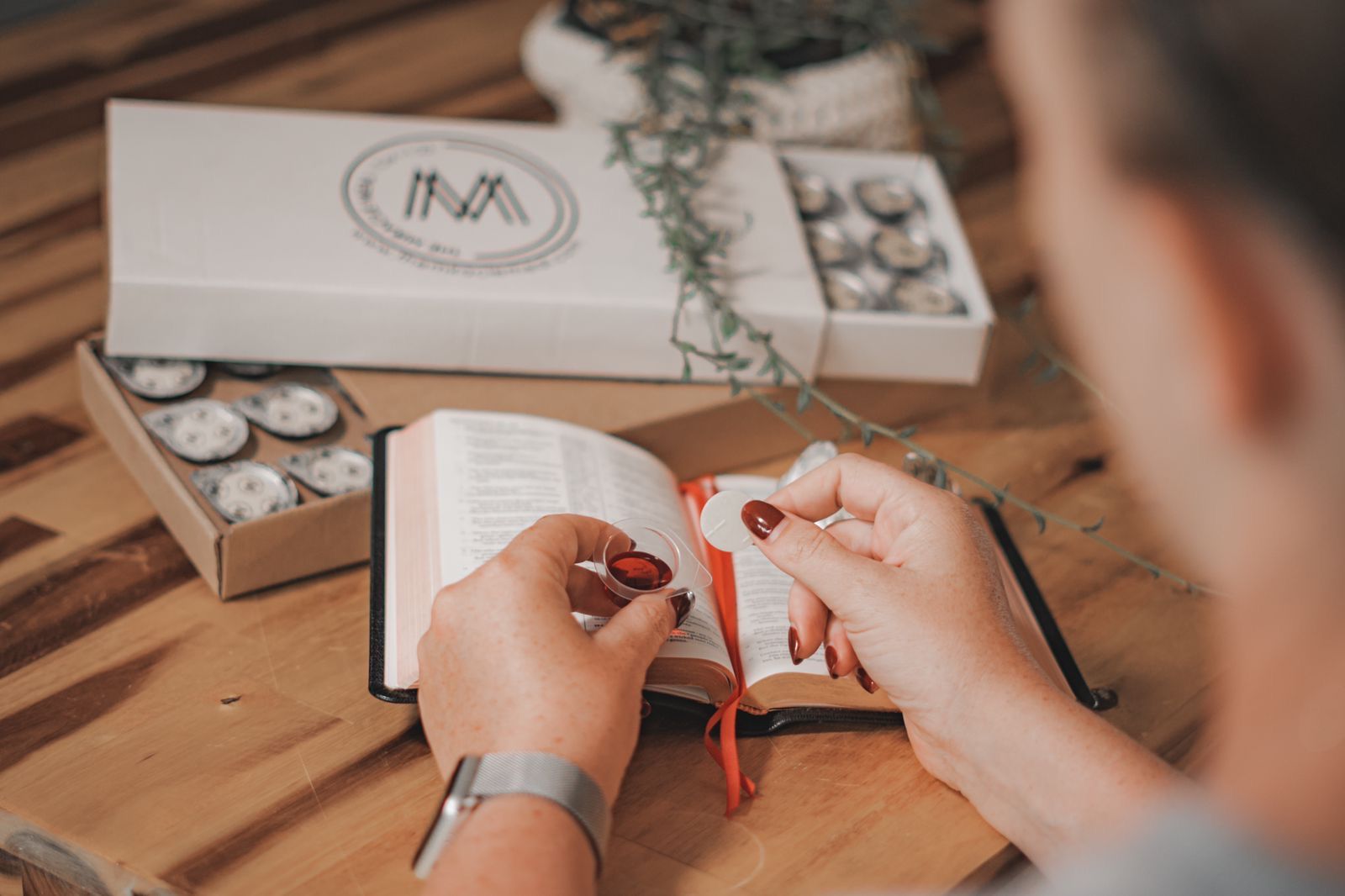
Sealed packaging also provides a clear “chain of custody.” With prefilled portions, the bread and juice remain protected until the recipient opens them. Most designs use a top film to access the wafer and a second, foil seal to access the juice, keeping each element enclosed right up to the moment of partaking. This reduces opportunities for contamination and reassures worshipers that what they receive has been safely prepared.
The experience matters, too. Quiet, easy-open designs let congregations participate together without the distraction of crinkling bags or clinking cups, and ushers can distribute with minimal contact. When people trust the process, they can focus on the meaning of the sacrament, not the mechanics of how it’s served.
Operational Ease for Leaders and Volunteers
Before 2020, serving communion often required a sizable prep team to slice bread, pour hundreds of cups, sanitize trays, and clean up spills. Today, no-prep, prefilled cups allow small teams to set up in minutes. This frees leaders to invest time in pastoral care, music rehearsal, or greeting visitors rather than managing food-service logistics.
The post‑pandemic move toward prefilled communion elements is as much about logistics as it is about health. The two-step opening—first the top film for the wafer, then the middle foil for the juice—is intuitive for congregants and volunteers alike. Because the opening action is silent and consistent, pastors can guide the congregation with clear, unhurried cues, preserving a unified moment and a predictable service flow.
Setup and cleanup are simpler as well. Teams can place cups on seats before the service or distribute at entrances without worrying about spills or uneven portions. If attendance fluctuates, there’s no last-minute rush to pour more cups; extras remain sealed and ready for a future service thanks to the reliable shelf life many churches now depend on.
Scalability, Outreach, and Responsible Stewardship
Beyond Sundays, sealed cups make ministry more portable. Small groups, student retreats, hospital visits, and outdoor services can celebrate communion without transporting fragile trays or preparing elements on-site. This is one reason why churches continue to adopt pre‑packaged cups long after lockdowns ended: the format supports ministry wherever people gather.
Shelf stability is another advantage. With a one-year shelf life, churches can keep an appropriate inventory on hand for seasonal spikes—Easter, Christmas, conferences—without worrying about spoilage. Predictable portions simplify budgeting, reduce last-minute supply runs, and minimize the waste that occurs when open bread and juice must be discarded after a service.
Stewardship also includes care for creation and the worship space. While single-serve formats introduce packaging, many cups are recyclable, and churches can place clearly marked bins to encourage responsible disposal. At the same time, sealed servings reduce leftover bread and juice, cut down on spills, and streamline post-service cleanup—tangible benefits for facilities teams and volunteers.
Conclusion
In short, the shift toward individually sealed communion cups is driven by enduring priorities: safeguarding health, strengthening trust, simplifying volunteer workloads, scaling ministry beyond the sanctuary, and practicing thoughtful stewardship. What started as a response to unprecedented circumstances has become a reliable way to serve the sacrament with care and consistency.
If your church is exploring this path, visit our online store to shop pre-filled communion cups with a one-year shelf life. Our cups require no preparation, feature a top film for the wafer and a middle foil seal for the juice, open silently and easily, and the plastic cups are recyclable—everything you need to serve communion simply and reverently.